
"It's Okay"
Music rights and how to admire the flower while recognizing the root?

This is not my first time setting poetry or prose to music.
In fact, as I forge ahead in this new career pivot to music I’m learning so much about what I would describe as the secrets to great songs. In one word, it’s MELODY.
Some of course will disagree and I’ve resigned to believing that all reality is now up for debate and even the hardest of facts can have holes poked in it. I’m looking at you gravity.
One of the seniors in a music workshop I was facilitating a couple months ago, said something so woo woo and yet so plainly. She said something to the effect of:
“That’s why music wards off evil spirits. Because they don’t like patterns, they thrive in chaos.”
- Mabel
I’ve also recently learned that a key part of making great music is to establish a pattern, and then disrupt it. What are we and what is the world if not patterns in repeat blended with the Uncertainty Principle? Sounds like a recipe for fun to me.
But back to setting poetry to music.
About a year ago, it clicked for me that there can be fuzzy lines between lyrics, poetry, mantras, and prayers. A poem can be lyrics, lyrics can be a poem, a poem can be a mantra, a mantra can be a prayer, they all swirl and dance around together.
When I read Rumi’s “A Great Wagon” the words struck me so deeply that I knew I needed to set it to a melody and sing it regularly like a sonic mantra, so that I could truly integrate its profound messages. Like a prescription from a doctor, take this 2-3 times a day… I wanted a consistent reminder to let the beauty we love be what we do. To remember that there are hundreds of ways to kneel and kiss the ground.
To remember that I must ask for what I really want.
To be transported to the Divine scene painted with the words:
Out beyond ideas of wrongdoing and rightdoing,
there is a field. I’ll meet you there.
When the soul lies down in that grass,
the world is too full to talk about.
Drums and beats are foundational and primal, humans first language. Chord progressions build on rhythm and make the pattern more interesting. Melody though is stickiest because although there are many iconic melodies created with musical instruments, many of the most widely celebrated are associated with the human voice. Melody is deeply human. And avian (think songbirds).
Melody transcends language. It is universal. The end of “Hey Jude” or the recently revived “What’s Up” by 4 Non Blondes elucidates this point because the chorus soars precisely due to its lack of complexity. It’s mostly two words “hey” and “yeah”, and you kinda got it belt it to hit it. Also though, what the actual f*ck, is really going on? I think in no small part this chorus also succeeds because it’s a question. I wonder if its famed songwriter Linda Perry, ever thinks about the striking similarity to Marvin Gaye’s 1971 hit? Apparently the bible even says “there’s nothing new under the sun”, and that’s a pretty old book…
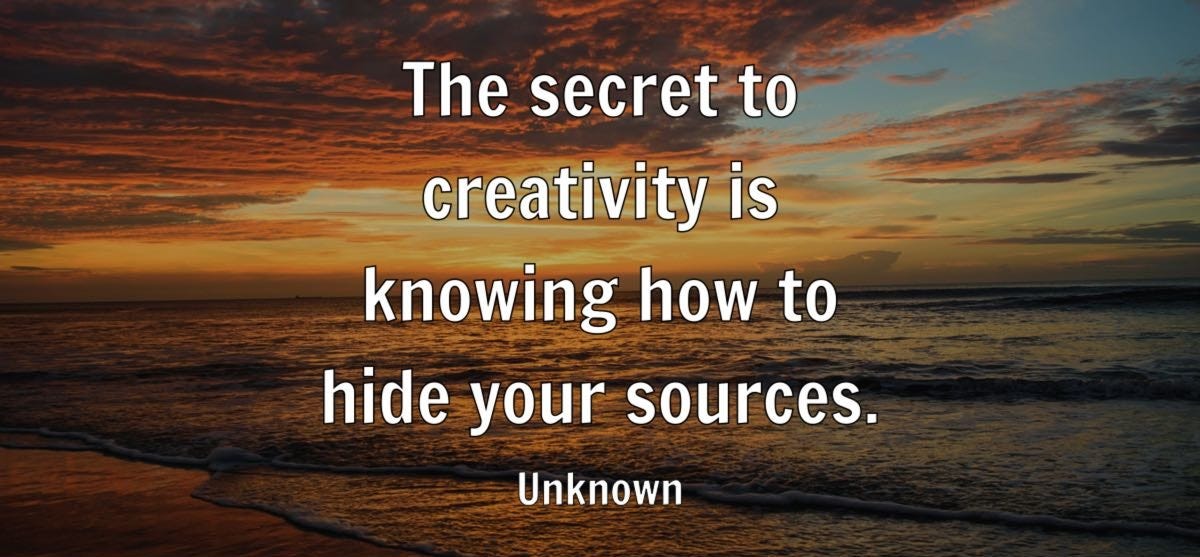
As I begin my research for my own song publishing, my head spins. Publishing Rights Organizations, or “PROs” to speak in music biz lingo, collect and distribute royalties for songwriters and composers. It would be “wise” for me to register my songs with a PRO like BMI or ASCAP. Prior to the commodification of music, particularly for the genre of folk music, it was literally the way new music was made. You built your own songs off of chords and/or melodies that were handed down from previous generations.
Pete Seeger talks a bit about this in his sing-a-long memoir “Where Have All the Flowers Gone”. Though even Pete is guilty of misappropriating music for his own personal financial gain. Songs like “We Shall Overcome”, and “Wimoweh” which The Tokens later took and transformed into the famed “The Lion Sleeps Tonight”, based on Solomon Linda’s original melody, a Zulu songwriter from South Africa.
Even Pete relinquished:
The realm of copyright law and publishing rights gets daunting really quickly.
But as my long-time friend and creative collaborator “Professor Play” aka “Lady J” aka Jessica Brown once said:
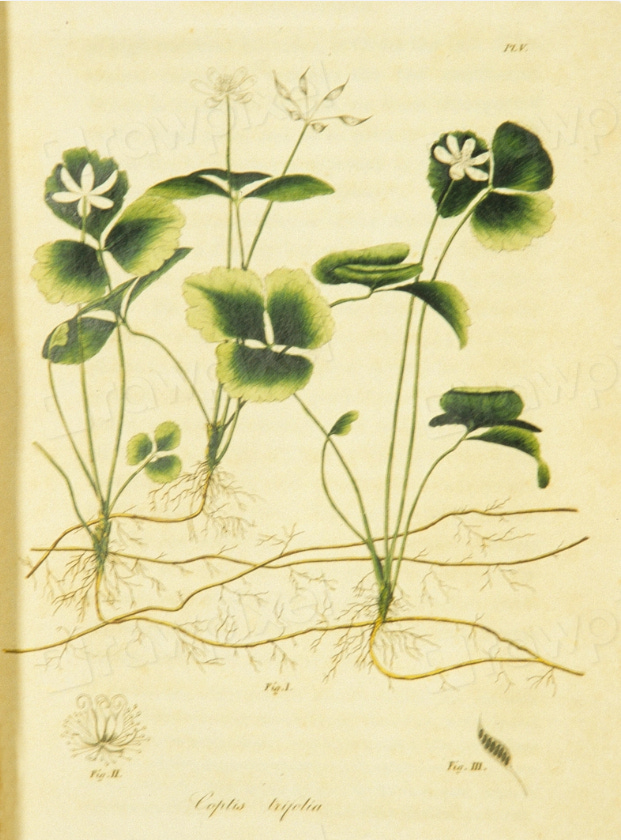
“It’s okay to admire the flower or the bud, but honor and recognize the root.”
“It’s Okay”
One autumn day, a couple houses down from me, we came across a collection of items on the curb, a witch’s moving pile. We knew it was a witch because of well, all the witch books. One of the books was not a witch book. It was titled “The Comfort Book” by Matt Haig. On page 10 lives a little passage called “It’s Okay”.
With winter officially here, and the instinct to hibernate, it felt like these words found me at the precise right time. Granting me all the permission I knew I already had, but needed to be reminded of…
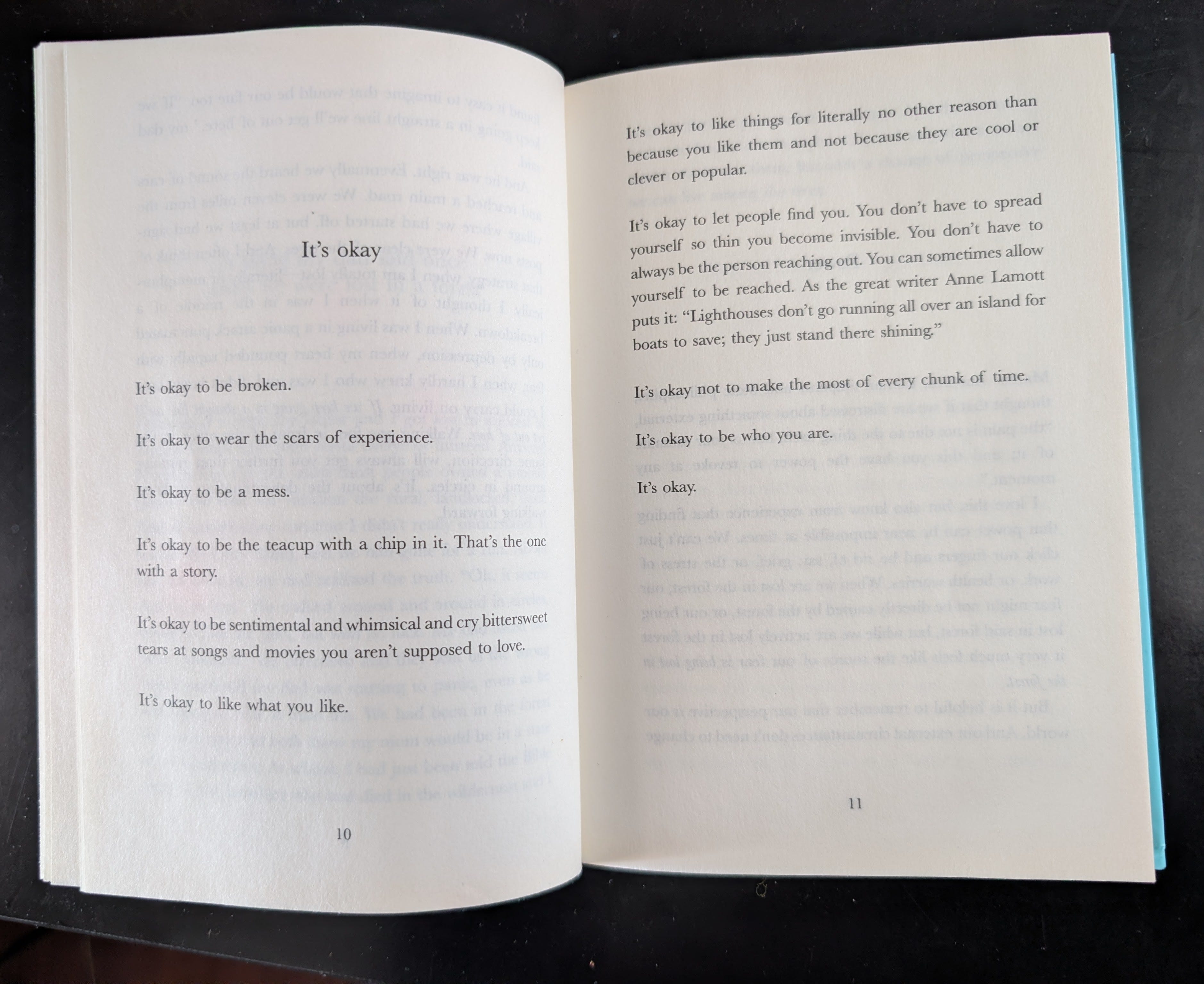
“It’s okay to not make the most of every chunk of time.”
- Matt Haig
I wanted these words in my life regularly, as a mantra of sorts.
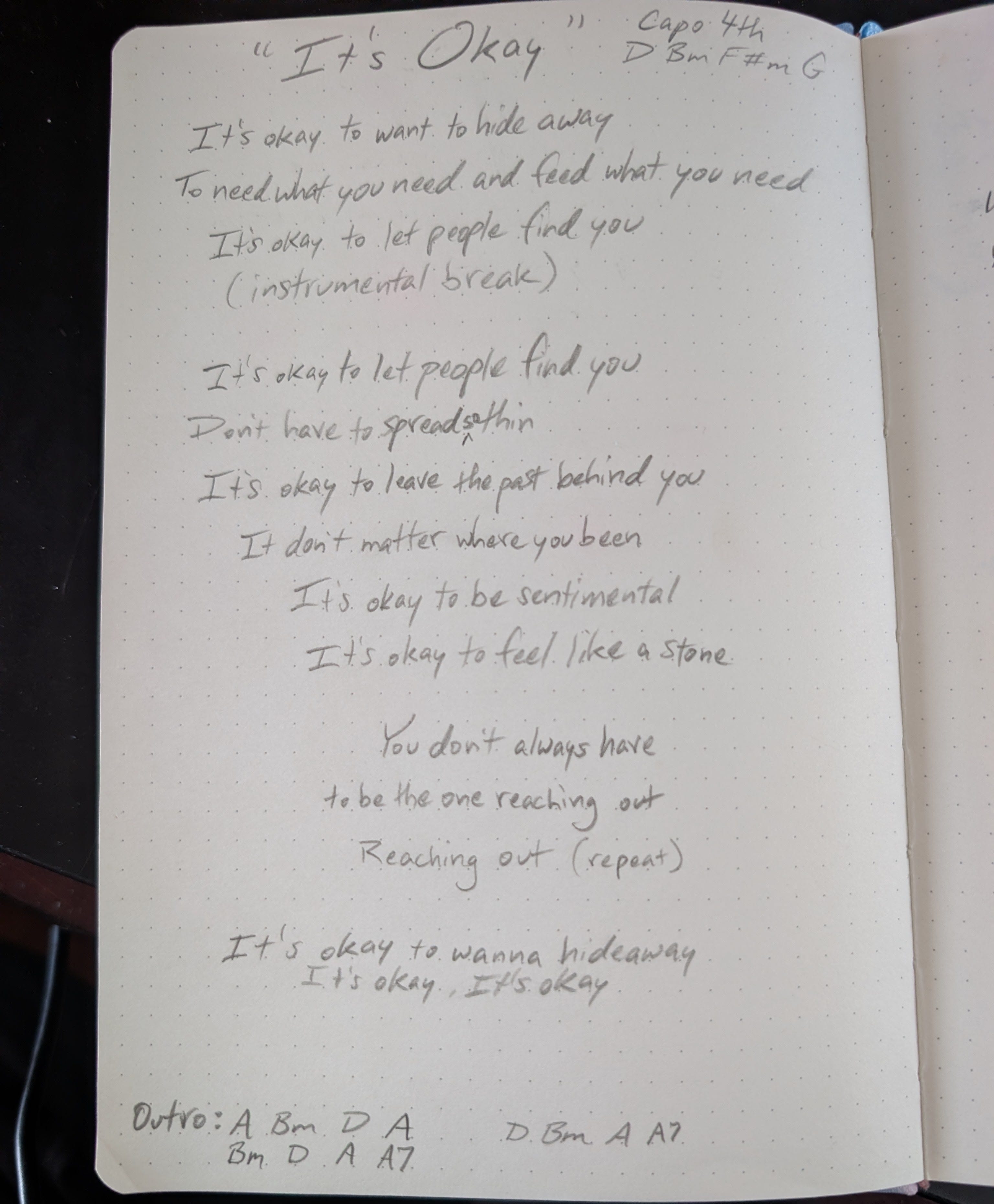
So I set the words to music and tied it to a melody.
I’ve never written a song before that I heard so clearly as a “dance track”. It begs for a beat. And while drums were my first instrument, I have not learned the art of beat making… yet. Heck I’m still struggling to figure out my own ability to multi-track!
So here is the raw acoustic version, a kind of cross between musical acts Goth Babe and the Shout Out Louds. With words respectfully re-arranged that were originally written by Matt Haig. Matt, if you ever read this and are not comfortable with or “okay” ; ) with me sharing and remixing your work like this, just say so and I will take this post down.
Happy, peaceful wintering to you.
May we all lean in to slowing down and hiding away for a bit if that’s what our minds and bodies feel called to do. I know I’m increasingly taking my cues from Nature.
With Love, Groove, & Gratitude,
Lisa
I really love this song, the origin story, and the musings on origins! Thanks for sharing 💓